Hannibal Gadafi sigue ‘retenido’ en el Libano a pesar de ser liberado tras diez años detenido
Su estado de salud agravador por su larga estancia en prisión, más el asesinato de su hermano Saif al Islam no le permiten salir con garantías del país
ELDIGITALDECANARIAS.NET / Beirut
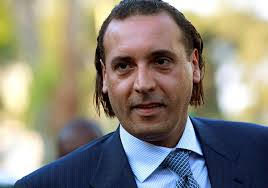
Hannibal Gadafi sigue en el Libano, retenido no por imposición, no por voluntad propia, sino por varias circunstancias, algunas muy graves. Una de ellas tiene que ver con su propia seguridad, ahora cuestionada por el asesinato de su hermano Saif al Islam, lo que hace temer por su vida y la otra por su estado de salud, agravado por su larga estancia en prisión en dicho país.
El gobierno libanés y especialmente el libio no han tomado cartas en este asunto, a modo de garantizar la integridad y la seguridad de Hannibal Gadafi, que se ve injustamente ‘recluido’ ne un país que durante muchos años le otorgó un estado carcelario, que sin duda le ha afectado muchísimo.
Hay que recordar que las autoridades libanesas liberaron a Hannibal Gaddafi, hijo del exlíder libio Muammar Gaddafi, el 10 de noviembre de 2025, poniendo fin a casi 10 años de detención arbitraria sin juicio, declaró. Si bien la decisión de las autoridades judiciales de poner fin al trato ilegal infligido a Gaddafi es un paso en la dirección correcta, que debía haberse tomado hace tiempo, también deberían retirar formalmente todos los cargos infundados en su contra y proporcionar una indemnización adecuada por su detención ilegal.
El investigador judicial del caso, Zaher Hamadeh, ordenó inicialmente la liberación de Gaddafi el 17 de octubre, pero inicialmente estuvo condicionada al pago de una fianza de 11 millones de dólares estadounidenses y a una prohibición de viajar durante dos meses. Tras una apelación de los abogados de Gadafi, las autoridades judiciales redujeron su fianza a 900.000 dólares y levantaron la prohibición de viajar el 6 de noviembre. Las autoridades liberaron a Gadafi el 10 de noviembre, pero no han retirado formalmente los cargos relacionados con "ocultar información" sobre la desaparición en 1978 del clérigo libanés Imam Moussa al-Sadr en Libia, cuando Gadafi tenía dos años, según dos de sus abogados.
Las Fuerzas de Seguridad Interna del Líbano arrestaron a Gadafi en diciembre de 2015 bajo acusaciones aparentemente infundadas de que ocultaba información sobre la desaparición de al-Sadr en Libia en 1978 junto con dos compañeros. El destino del clérigo sigue siendo un tema político delicado en el Líbano.
Antes de su detención, Gadafi residía principalmente en Siria con su familia tras huir de Libia en 2011, durante el levantamiento contra el gobierno de su padre. Sin embargo, en 2015, hombres armados lo secuestraron en Siria, cerca de la frontera libanesa, tras, según informes, atraerlo a lo que él creía que era una entrevista periodística. En diciembre de 2015, Hamadeh emitió una orden de arresto contra Gadafi, acusándolo formalmente de ocultar información sobre la desaparición de al-Sadr en 2016, según dos de sus abogados.
Nadie debería ser encarcelado durante 10 años sin juicio. El artículo 9 del Pacto Internacional de Derechos Civiles y Políticos (PIDCP), del que Líbano es parte, establece que “toda persona arrestada o detenida a causa de una infracción penal será llevada sin demora ante un juez u otro funcionario autorizado por la ley para ejercer funciones judiciales y tendrá derecho a ser juzgada dentro de un plazo razonable o a ser puesta en libertad”. Incluso en caso de ser puesta en libertad, toda persona tiene derecho a ser juzgada sin dilaciones indebidas. Según el PIDCP, las personas que hayan sido objeto de arresto o detención ilegal “tendrán derecho a una indemnización efectiva”.
Las autoridades libanesas deben investigar y exigir responsabilidades a los responsables de la terrible experiencia de Gadafi. “También deben garantizar el respeto del Estado de derecho y la independencia del poder judicial para que otros no corran la misma suerte” y tomar medidas para que tenga una salida segura y honrosa, la que se merece.
English version
Hannibal Gaddafi remains 'detained' in Lebanon despite being released after ten years in prison
His deteriorating health, exacerbated by his long imprisonment, coupled with the assassination of his brother Saif al-Islam, prevents him from leaving the country safely
Hannibal Gaddafi remains in Lebanon, detained not by force, not of his own volition, but due to several circumstances, some very serious. One of these concerns his own safety, now threatened by the assassination of his brother Saif al-Islam, which raises fears for his life. The other concerns his health, aggravated by his long imprisonment in that country.
The Lebanese government, and especially the Libyan government, have not taken any action to guarantee the safety and security of Hannibal Gaddafi, who is unjustly 'confined' in a country that for many years subjected him to a prison-like state, which has undoubtedly affected him greatly.
It should be recalled that Lebanese authorities released Hannibal Gaddafi, son of former Libyan leader Muammar Gaddafi, on November 10, 2015, ending nearly 10 years of arbitrary detention without trial, he stated. While the judicial authorities' decision to end the unlawful treatment of Gaddafi is a step in the right direction, one that should have been taken long ago, they should also formally drop all unfounded charges against him and provide adequate compensation for his unlawful detention.
The judicial investigator in the case, Zaher Hamadeh, initially ordered Gaddafi's release on October 17, but it was initially conditional on the payment of an $11 million bond and a two-month travel ban. Following an appeal by Gaddafi's lawyers, the judicial authorities reduced his bond to $900,000 and lifted the travel ban on November 6. Authorities released Gaddafi on November 10, but have not formally dropped charges related to "concealing information" about the 1978 disappearance of Lebanese cleric Imam Moussa al-Sadr in Libya, when Gaddafi was two years old, according to two of his lawyers.
Lebanon’s Internal Security Forces arrested Gaddafi in December 2015 on seemingly unfounded accusations that he concealed information about the disappearance of al-Sadr in Libya in 1978, along with two companions. The cleric’s fate remains a sensitive political issue in Lebanon.
Before his arrest, Gaddafi resided primarily in Syria with his family after fleeing Libya in 2011 during the uprising against his father’s rule. However, in 2015, armed men kidnapped him in Syria, near the Lebanese border, after reportedly luring him into what he believed was a journalistic interview. In December 2015, Hamadeh issued an arrest warrant for Gaddafi, formally accusing him of concealing information about al-Sadr’s disappearance in 2016, according to two of his lawyers.
No one should be imprisoned for 10 years without trial. Article 9 of the International Covenant on Civil and Political Rights (ICCPR), to which Lebanon is a party, states that “everyone arrested or detained on a criminal charge shall be brought promptly before a judge or other officer authorized by law to exercise judicial power and shall be entitled to trial within a reasonable time or to release.” Even if released, everyone has the right to a trial without undue delay. According to the ICCPR, those who have been subjected to unlawful arrest or detention “shall be entitled to effective compensation.”
The Lebanese authorities must investigate and hold accountable those responsible for Gaddafi’s horrific ordeal. “They must also guarantee respect for the rule of law and the independence of the judiciary so that others do not suffer the same fate” and take steps to ensure he has a safe and dignified exit, which he deserves.